Battery Managenet System (BMS)
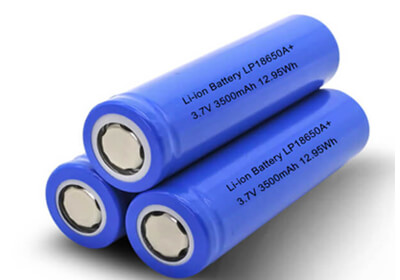 |
| Li-ion cells 18650 |
 |
| 5S BMS |
Battery Management Systems become more popular with Li-ion battery cells, specially for the optimizing the safety and effectiveness of the battery packs. When we look in to details Battery Management System (BMS) for lithium-ion (Li-ion) batteries serves several critical purposes:
Overcharge and Overdischarge Protection: One of the primary functions of a BMS is to prevent the Li-ion battery from overcharging or overdischarging, both of which can lead to safety hazards and reduced battery lifespan. It monitors the voltage of individual cells and ensures they stay within safe limits.
Cell Balancing: Li-ion batteries are made up of multiple cells connected in series and parallel configurations. Due to slight variations in manufacturing, these cells can have different capacities and characteristics. A BMS helps balance the charge and discharge among these cells to ensure they all contribute evenly to the overall battery performance. This extends the battery's life and improves its efficiency.
Temperature Management: Li-ion batteries can become dangerous if they overheat. A BMS monitors the battery's temperature and takes action to prevent overheating. This can involve controlling the charge/discharge rate or triggering cooling mechanisms.
Current Management: The BMS monitors the current flowing into and out of the battery, ensuring it stays within safe limits. This is crucial for both safety and battery performance.
State of Charge (SoC) Estimation: The BMS helps estimate the State of Charge, which is essentially how much capacity the battery has left. It does this by tracking the voltage, current, and temperature of the battery. Accurate SoC estimation is essential for user convenience and system operation.
Fault Detection and Protection: BMS systems can detect faults or abnormalities in the battery, such as a short circuit or a damaged cell. When such issues are detected, the BMS can isolate the faulty cell or shut down the entire battery to prevent further damage or safety hazards.
Communication and Data Logging: Many BMS systems are equipped with communication interfaces (e.g., CAN, UART) to allow external systems to monitor and control the battery. They can also log data related to the battery's performance and health over time, which is valuable for diagnostics and maintenance.
Enhancing Battery Lifespan: By actively managing the battery's charge and discharge cycles, temperature, and other factors, a BMS can help extend the overall lifespan of the Li-ion battery, reducing the need for premature replacements.
Safety: Perhaps the most critical purpose of a BMS is to ensure the safety of the Li-ion battery system. By actively monitoring and controlling various parameters, it helps prevent situations that could lead to fires, explosions, or other hazardous events.
In summary, a Battery Management System (BMS) is a crucial component in the safe and efficient operation of lithium-ion batteries. It safeguards the battery against overcharging, overdischarging, overheating, and other potential issues while also optimizing its performance and longevity.
BMS with Non-Volatile Memory

Data Logging: EEPROM can be used to store historical data about the battery's performance, including voltage, current, temperature, and capacity. This data can be valuable for diagnostics, troubleshooting, and assessing the long-term health of the battery.
Configuration and Calibration Data: BMS settings and calibration parameters can be stored in EEPROM. This allows for customization and fine-tuning of the BMS for specific battery chemistries, capacities, and operating conditions. It also ensures that these settings are retained even if the power is disconnected.Event Logging: EEPROM can record significant events or faults that occur during the battery's operation. This information can be crucial for identifying issues, understanding the battery's history, and taking corrective actions.
Security and Authentication: In some applications, EEPROM can store security keys or authentication information to prevent unauthorized access to the battery or system. This adds an extra layer of protection against theft or tampering.
Firmware Updates: Some BMS units with EEPROM support firmware updates. The EEPROM can store new firmware versions, allowing the BMS to be upgraded with enhanced features or bug fixes over time.
Extended Functionality: EEPROM can be used to enable additional features and functionality in the BMS, such as advanced diagnostics, logging of user-defined parameters, or custom algorithms for specific applications.
Fault Recovery: In the event of a fault or abnormal condition, the BMS with EEPROM can store information about the fault and the actions taken to mitigate it. This data can be useful for analyzing the root cause and improving the system's fault recovery procedures.
User Configuration: EEPROM can store user-specific configurations or profiles, allowing users to customize how the BMS operates within certain limits. This can be especially useful in applications where different operating modes are required.
Redundancy and Reliability: EEPROM can be used for redundancy and fault tolerance. Critical data and parameters can be duplicated and stored in multiple EEPROM cells, ensuring that even if one fails, the system can continue to operate with minimal disruption.
In essence, adding EEPROM to a BMS enhances its capabilities for data storage, customization, security, and reliability. It allows for more advanced features and provides a means to store critical information, making it a valuable addition in applications where these features are necessary or desirable.


